How to mentally prepare for visiting Auschwitz
A visit to Auschwitz-Birkenau is not a regular tourist tour. It's visiting a memorial where over 1.1 million people were murdered during the Holocaust. We strongly recommend reading something beforehand: the first chapter of Primo Levi's "If This Is a Man", or the first 30 minutes of Lanzmann's "Shoah" documentary, gives you minimum context. Without preparation, many people leave stunned without fully processing what they saw.
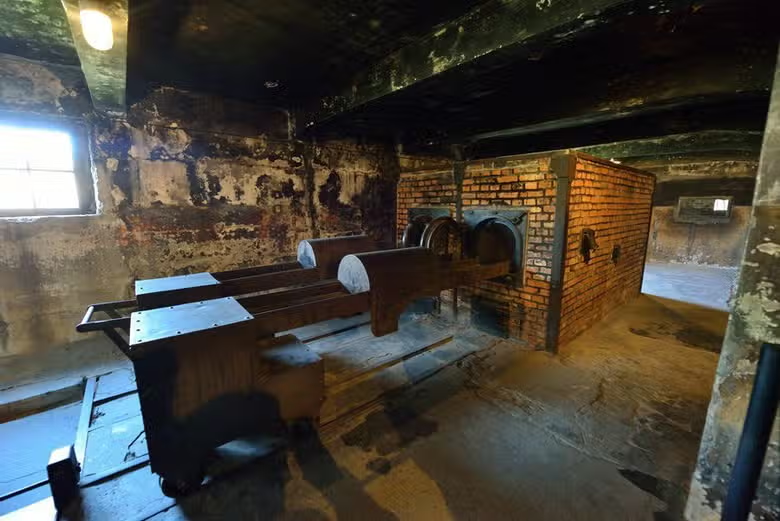
The memorial has a strict rule: silence in the personal effects rooms (the suitcases, the shoes, the human hair). No photos and no talking. The Memorial itself recommends not bringing children under 14 — the visual and narrative content is harsh and small kids lack the historical context. For teenagers from 14 up, it can be a deep educational experience if properly prepared.
Differences between Auschwitz I and Birkenau
People often say "I'm going to Auschwitz" thinking it's a single site. Actually it's two separate camps visited together on the same day:
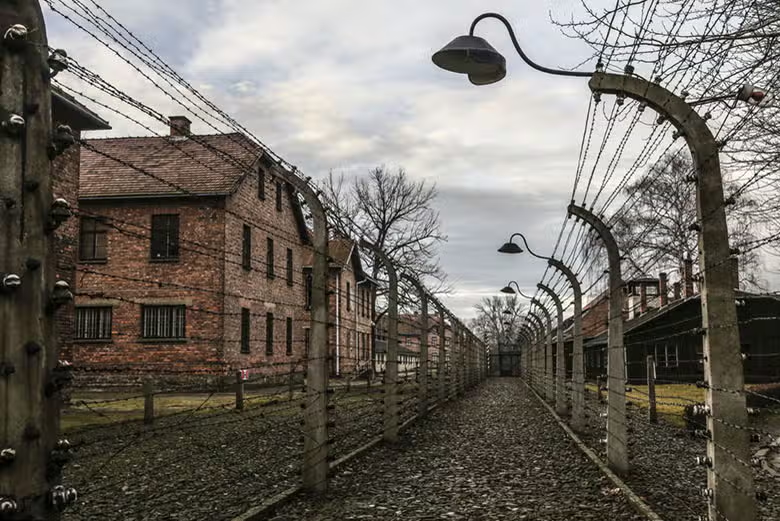
- Auschwitz I: the original 1940 camp, brick buildings. Museum rooms with personal effects, the cells, block 11 with the execution wall. Emotionally the heaviest part.
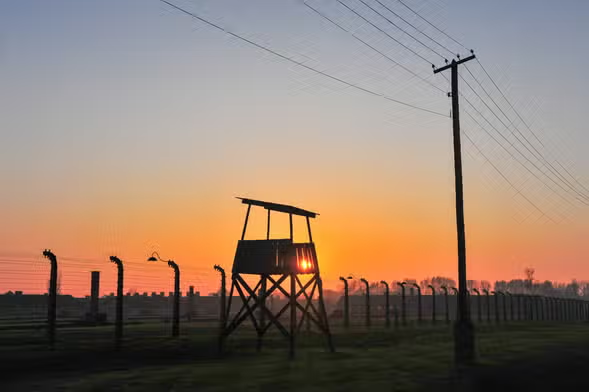
- Birkenau (Auschwitz II), 3 km away: the mass extermination camp. Largest gas chambers, train tracks reaching inside the camp, wooden barracks. 175 hectares, feels empty and solemn.
Free shuttle bus connects both. Combined visit lasts about 3.5-4 hours.
If you're planning a Krakow visit, our guided tours guide or our main online tickets page may help. To know who's behind these recommendations, see about the project.
Our honest take
Visiting Auschwitz-Birkenau isn't sightseeing in the usual sense: it's a place of memory that hits hard and is best approached with respect and a little preparation. A guided visit helps you understand what you're seeing.
👍 What we like most
- A deeply educational and necessary experience.
- The official guide provides context you'd miss on your own.
- The day trip from Krakow sorts transport and timed entry.
👎 What to know before booking
- It's emotionally heavy: not a plan for everyone.
- You must book ahead and keep to your assigned time.
- Don't combine it with the salt mine the same day: it's too much.
🎯 Who it's for (and who it isn't)
Yes if you want to understand 20th-century history up close. Be aware it's not a light visit; consider carefully if travelling with children.